Maintaining Deadeyes
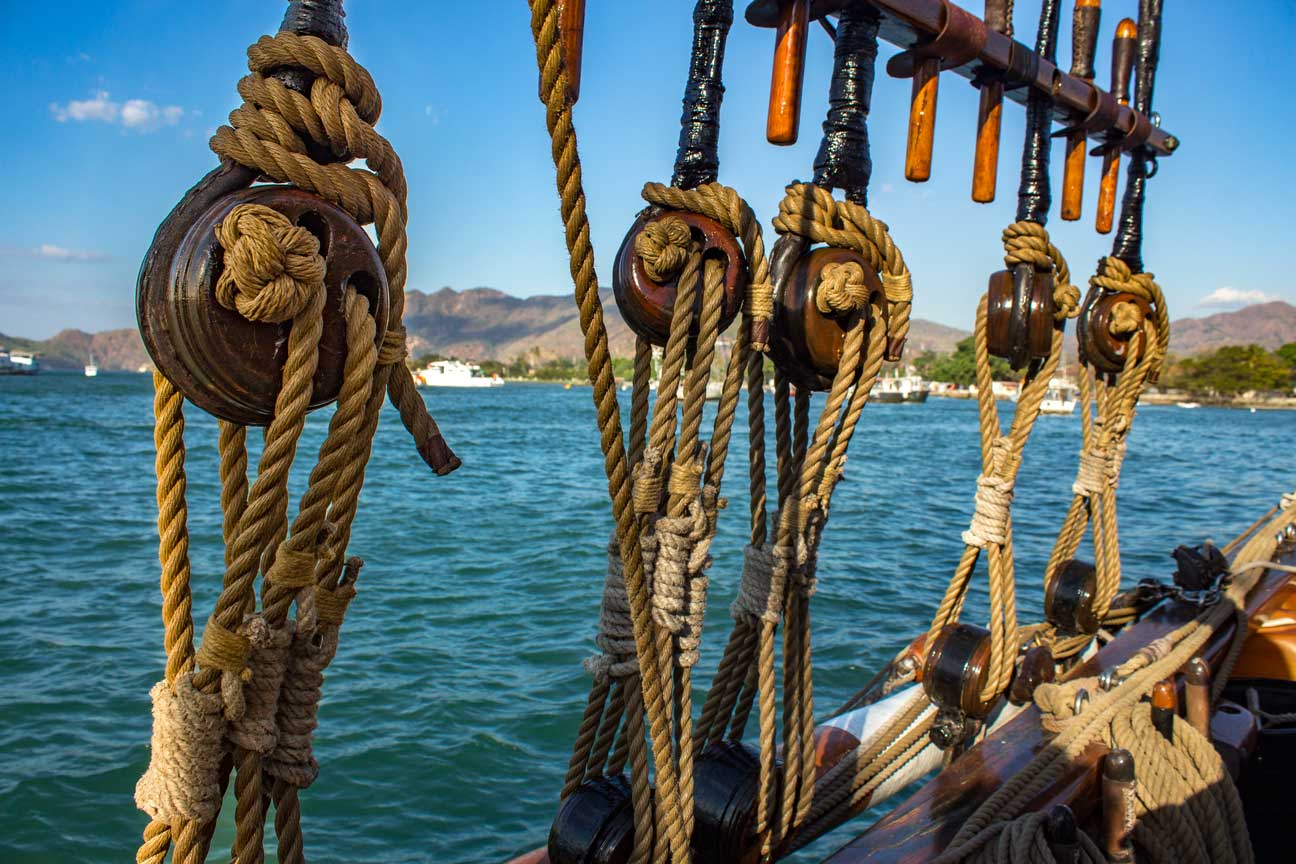
Triple deadeyes are used in pairs; a line called a lanyard is run back and forth between them, through the holes, so that they function again much as a block and tackle would. This provides a mechanical advantage, pulling harder on whatever the deadeyes are attached to. Pairs of deadeyes are placed in the shrouds (the lines that hold up the mast), where they are used to create greater tension in the shrouds.
-

- Traditional triple deadeyes are what support Vega's masts. Over time the lanyards suffer from wear and must be replaced. That give us a chance to refinish the deadeyes at the same time
-

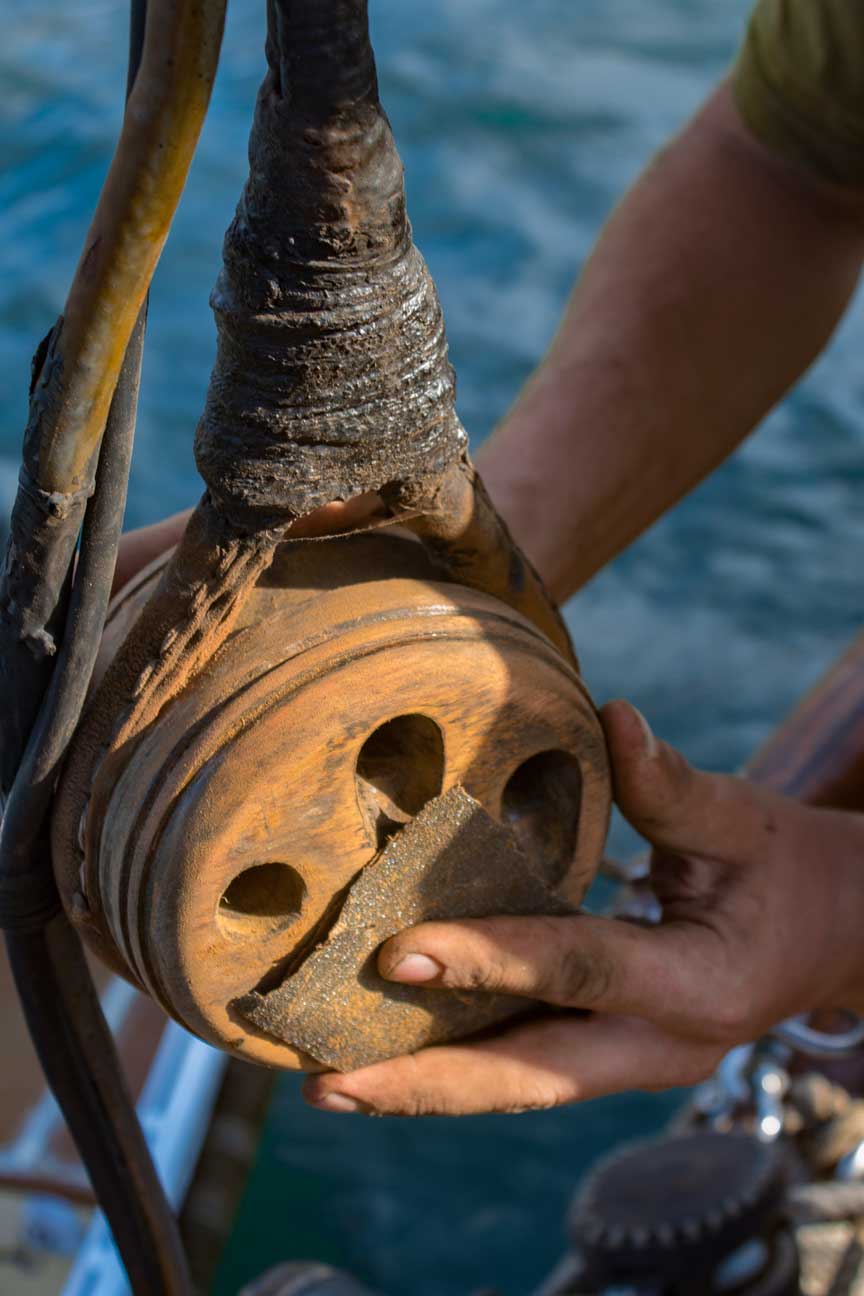
- We start with a good sanding to reach clean bare wood, then inspect for cracks or other signs of failure
-
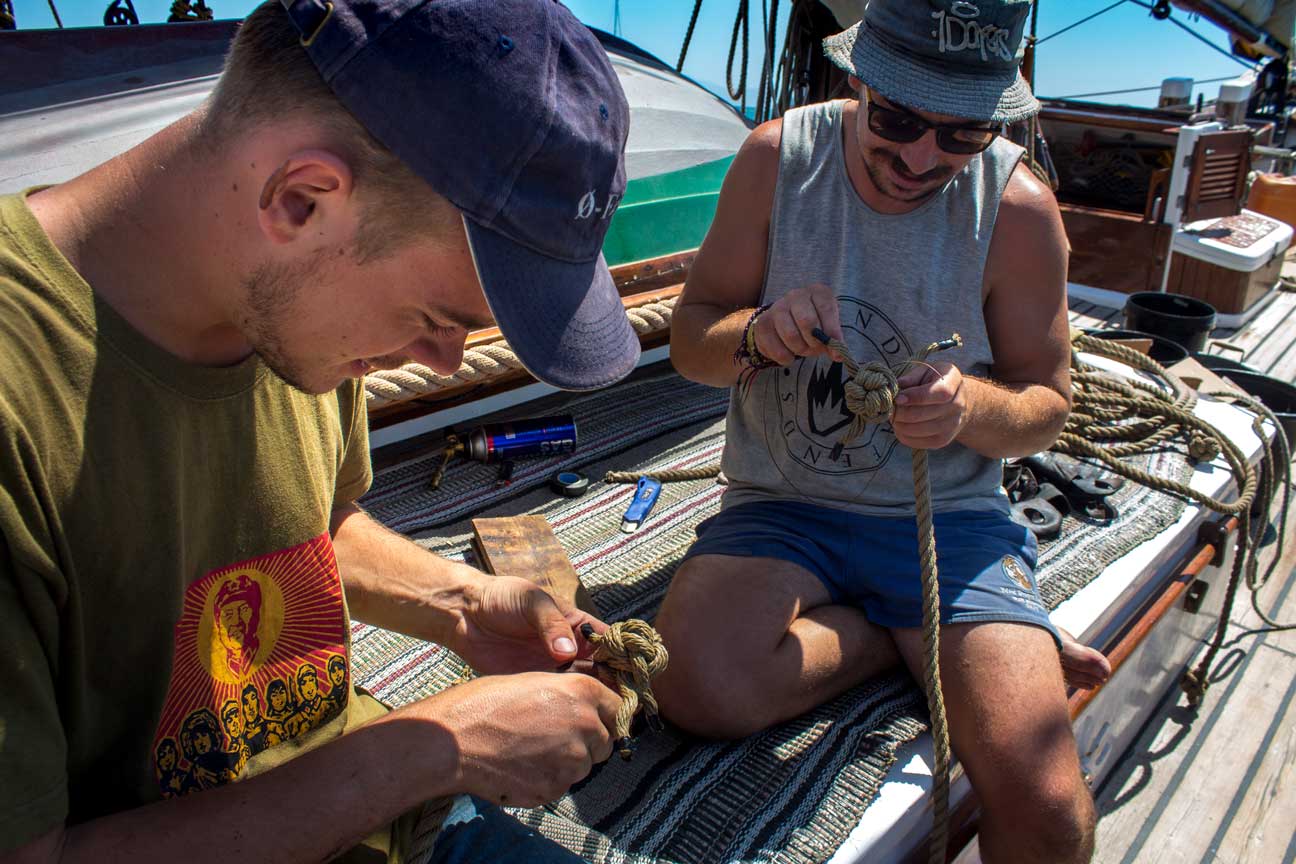
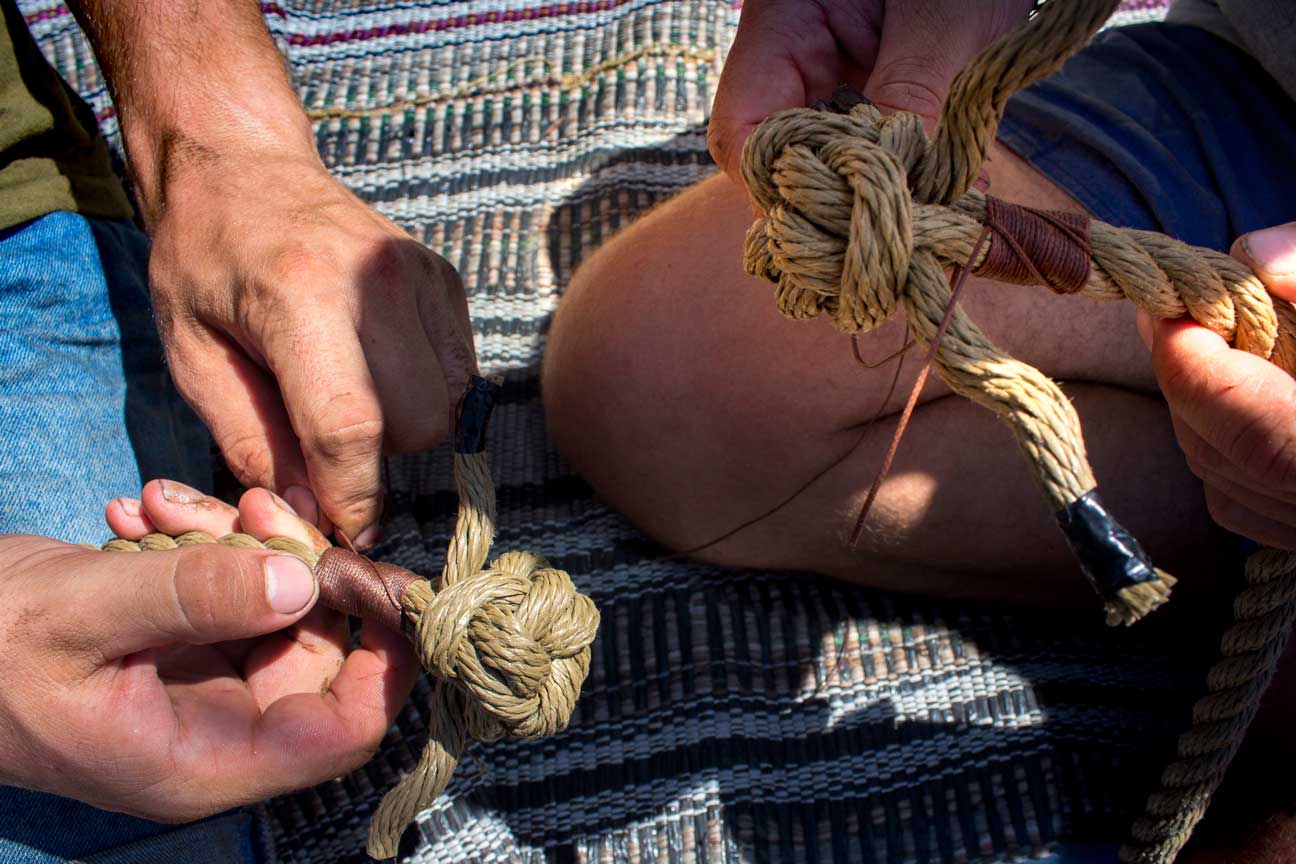
- Then we make the new lanyards. Whipping one end and putting a nice cozy rose knot on the other. Here Ben and Soren prepare new lanyards.
-
- Triple deadeyes are used in pairs; a line called a lanyard is run back and forth between them, through the holes, so that they function again much as a block and tackle would.
-
- To set up the lanyards used with dead-eyes, a suitable grease such as tallow is first applied to the holes.
-
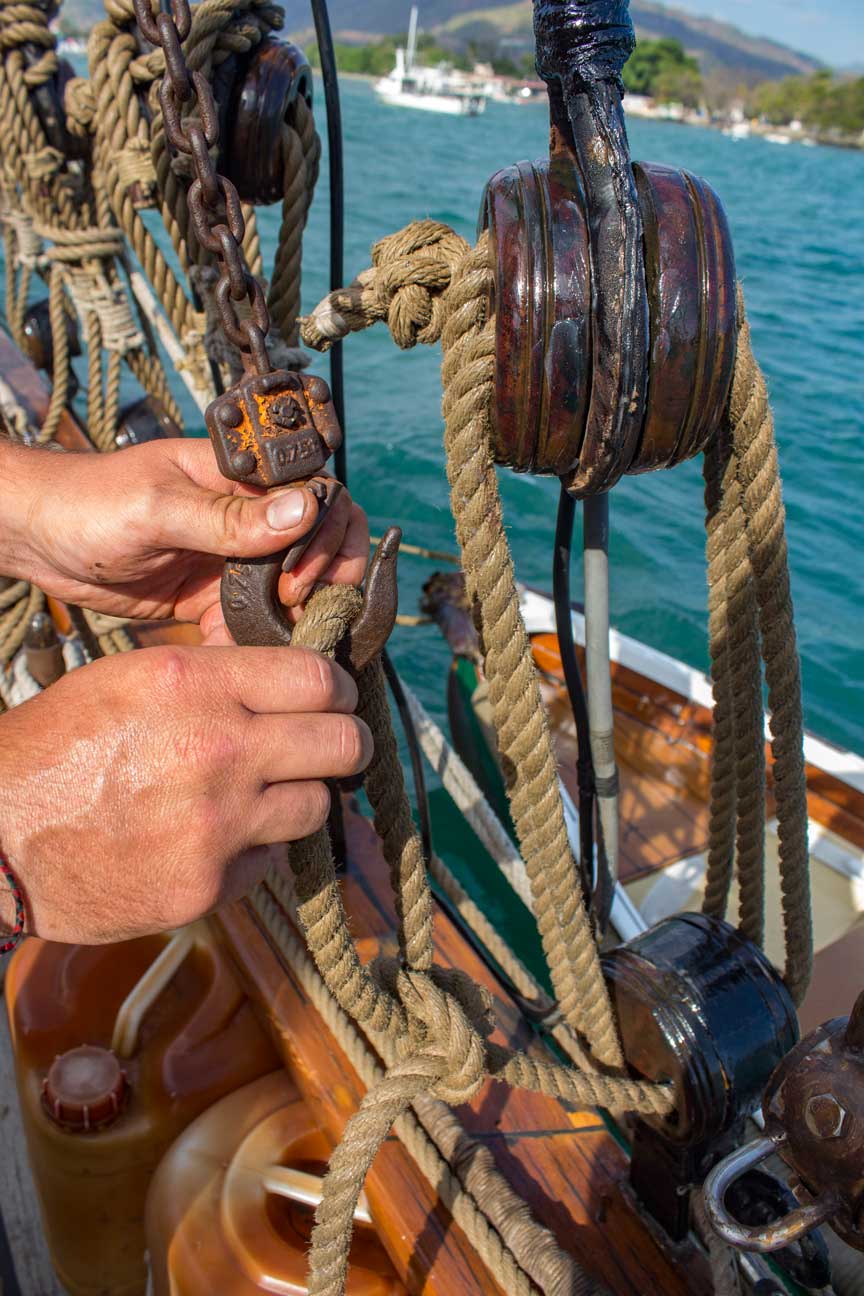
- We use a chain hoist to make tightening easier. The trick is snug but not too tight. Don't want to wring the mast or contort the boat.
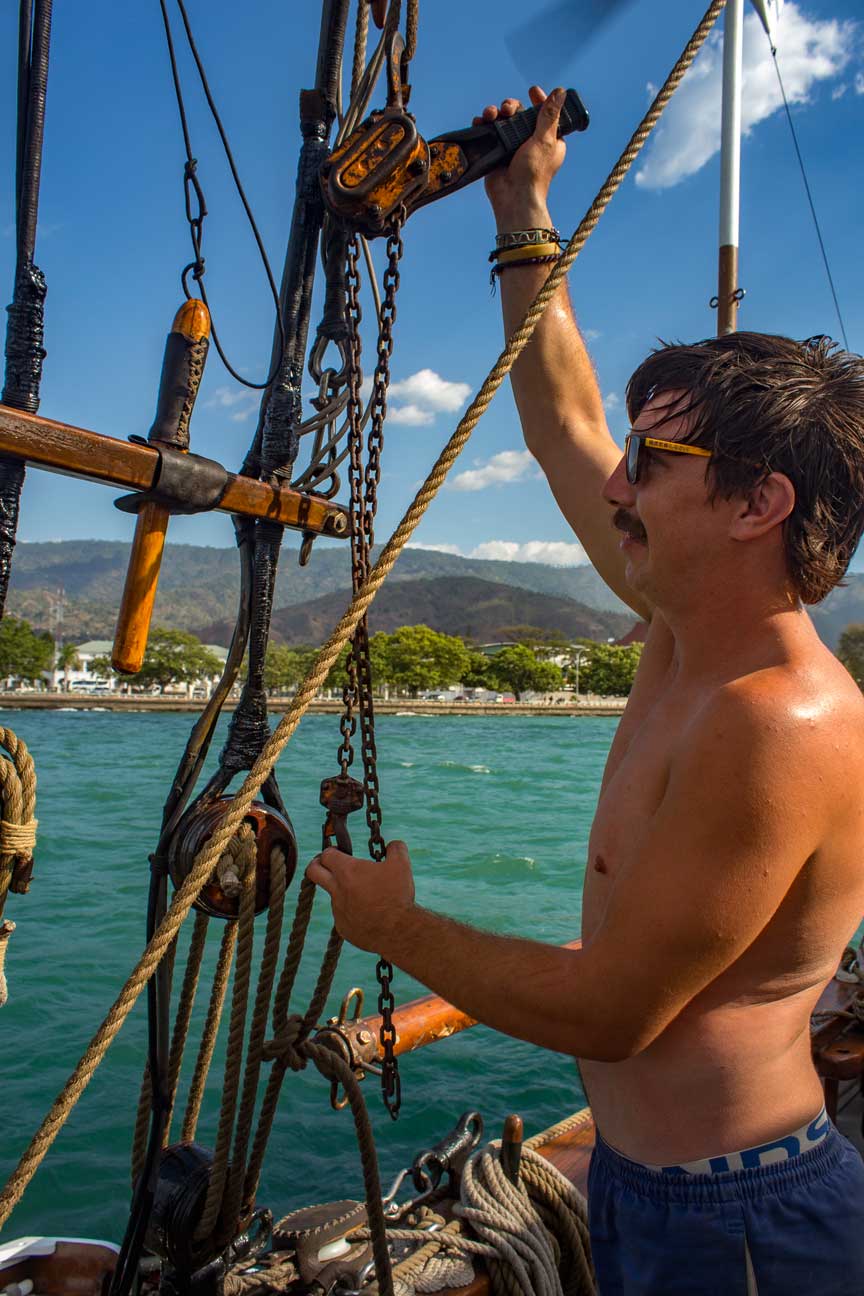
-
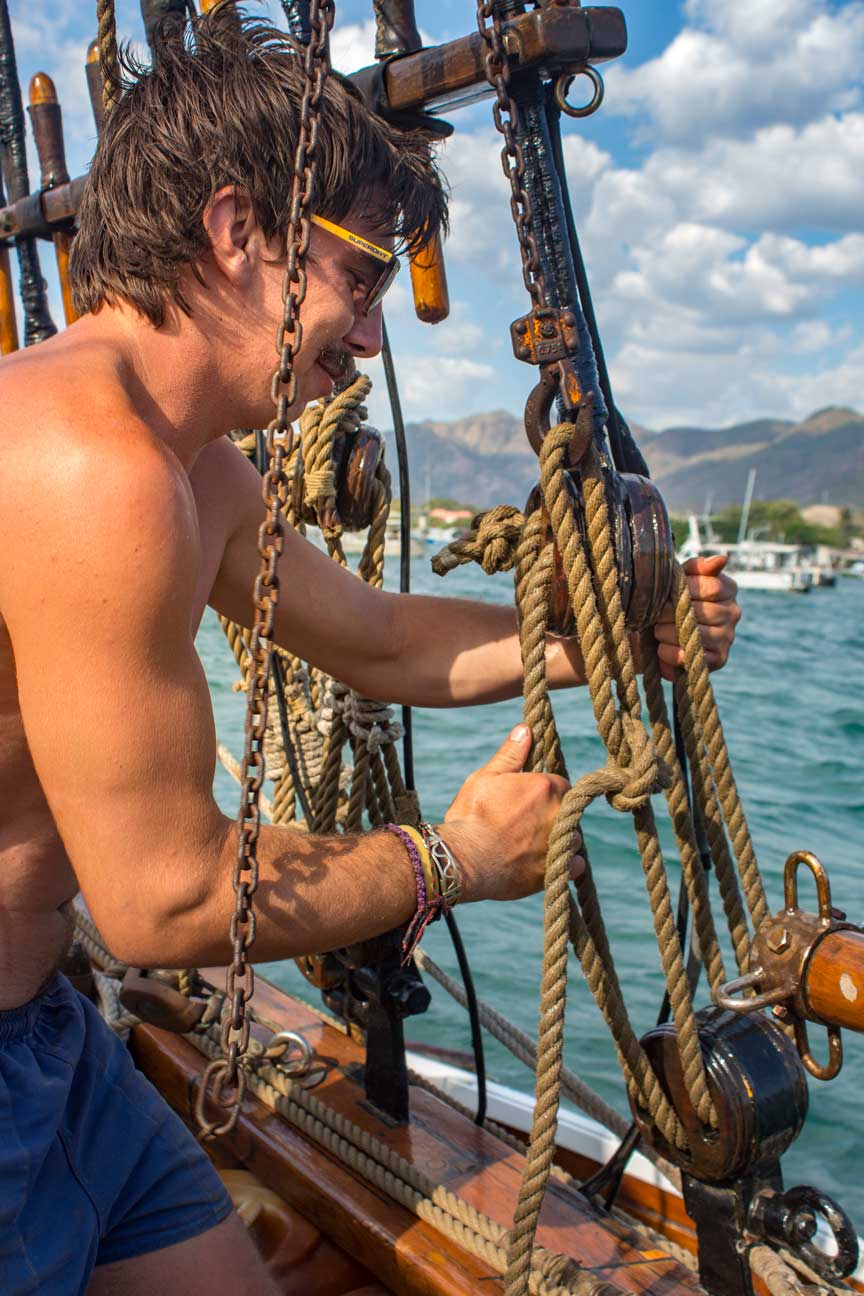
- As the tension comes on it helps to work through the slack from the end with the stopper toward the chain hoist.
-
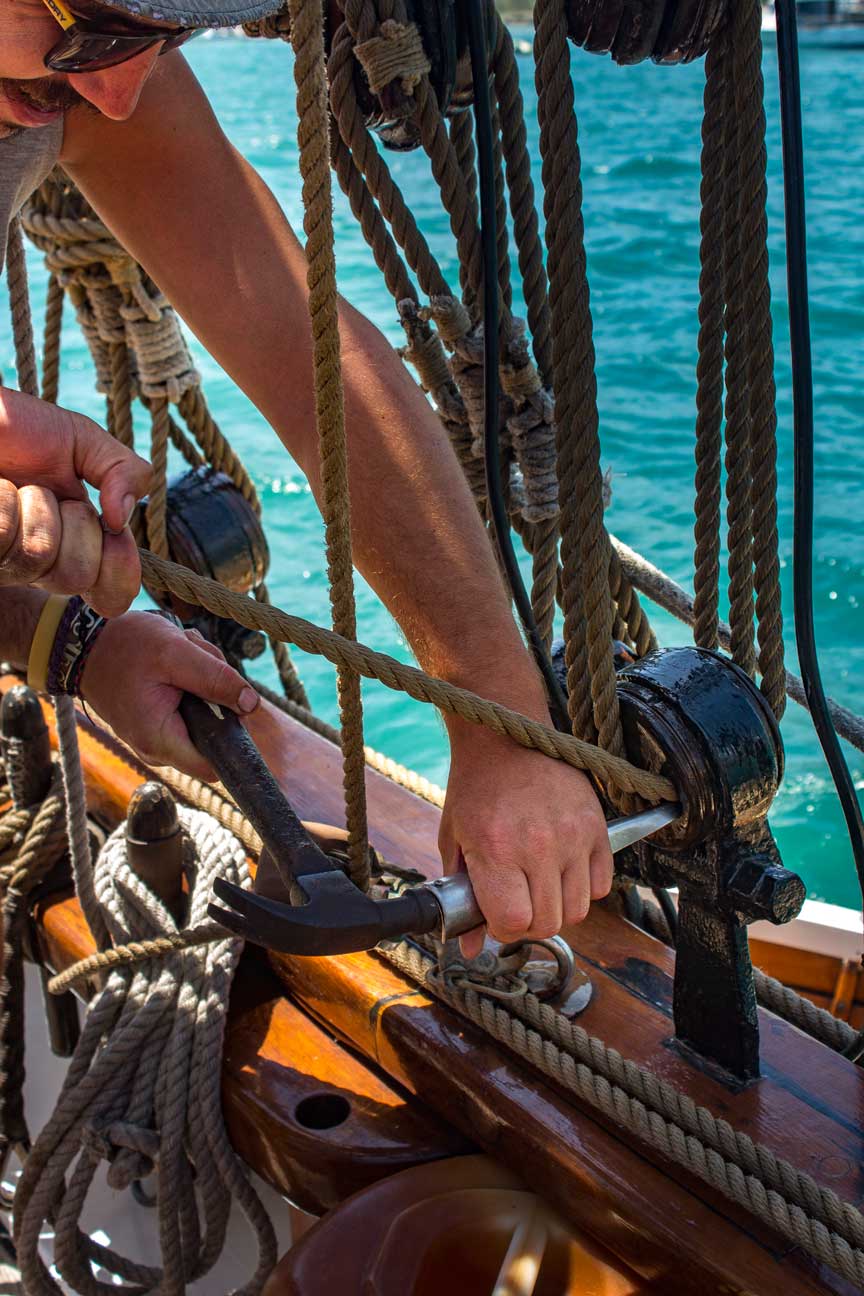
- When you have the tension right a Swedish fid is driven in to stop the line from going slack.
-
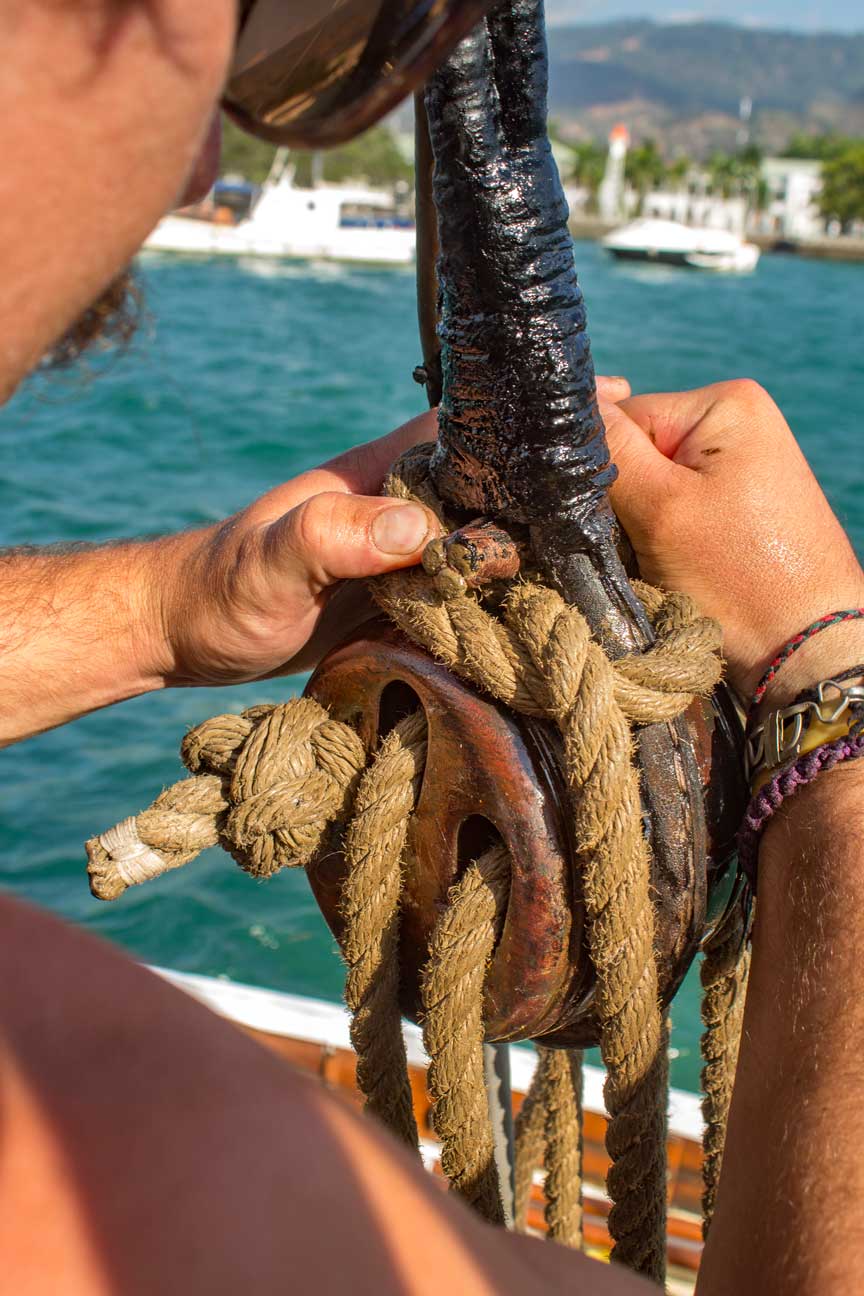
- The lanyard fall is then tied off and the remaining line wrapped round the shroud to look pretty. Be sure to leave enough tail to securly lash down
-
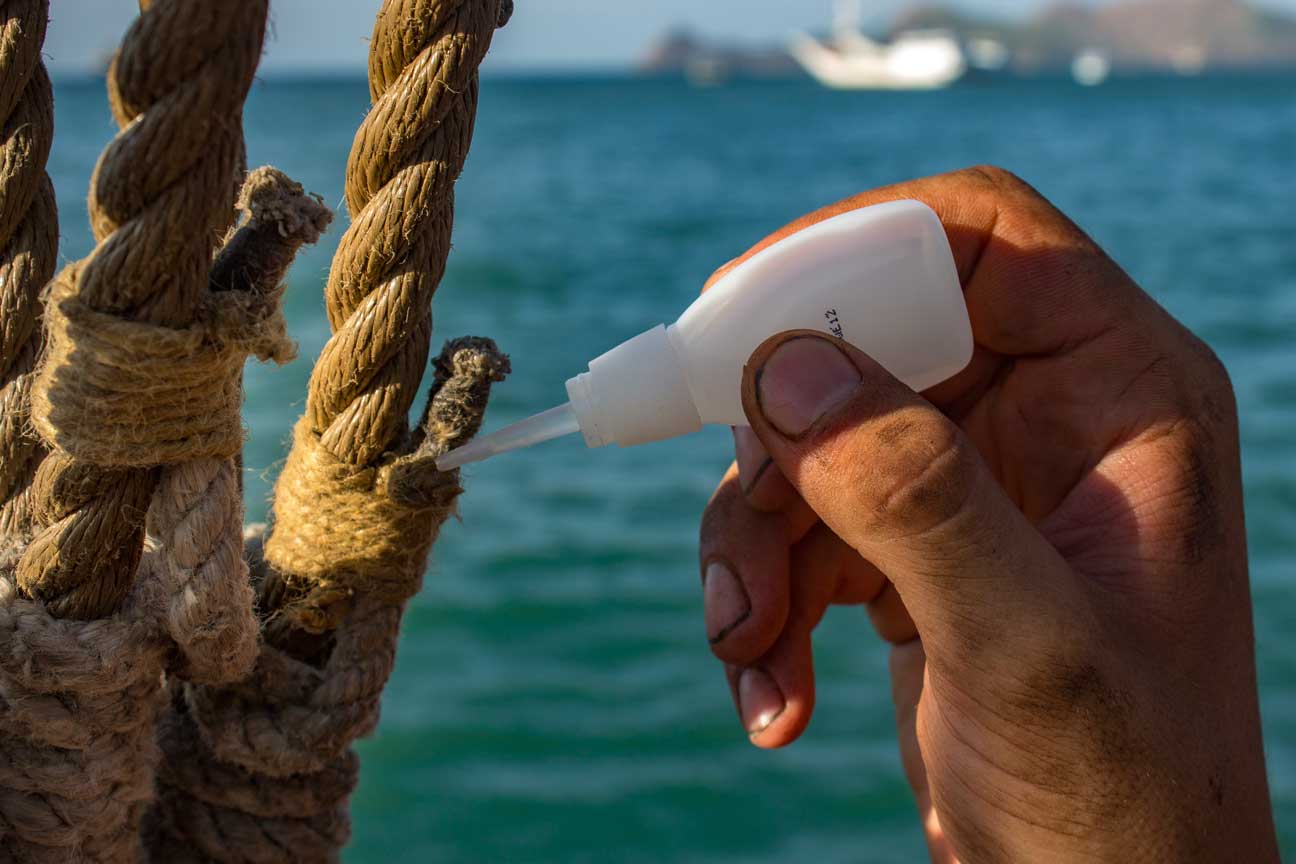
- Once the tails are lashed a drop of super glue helps keep them in place
-
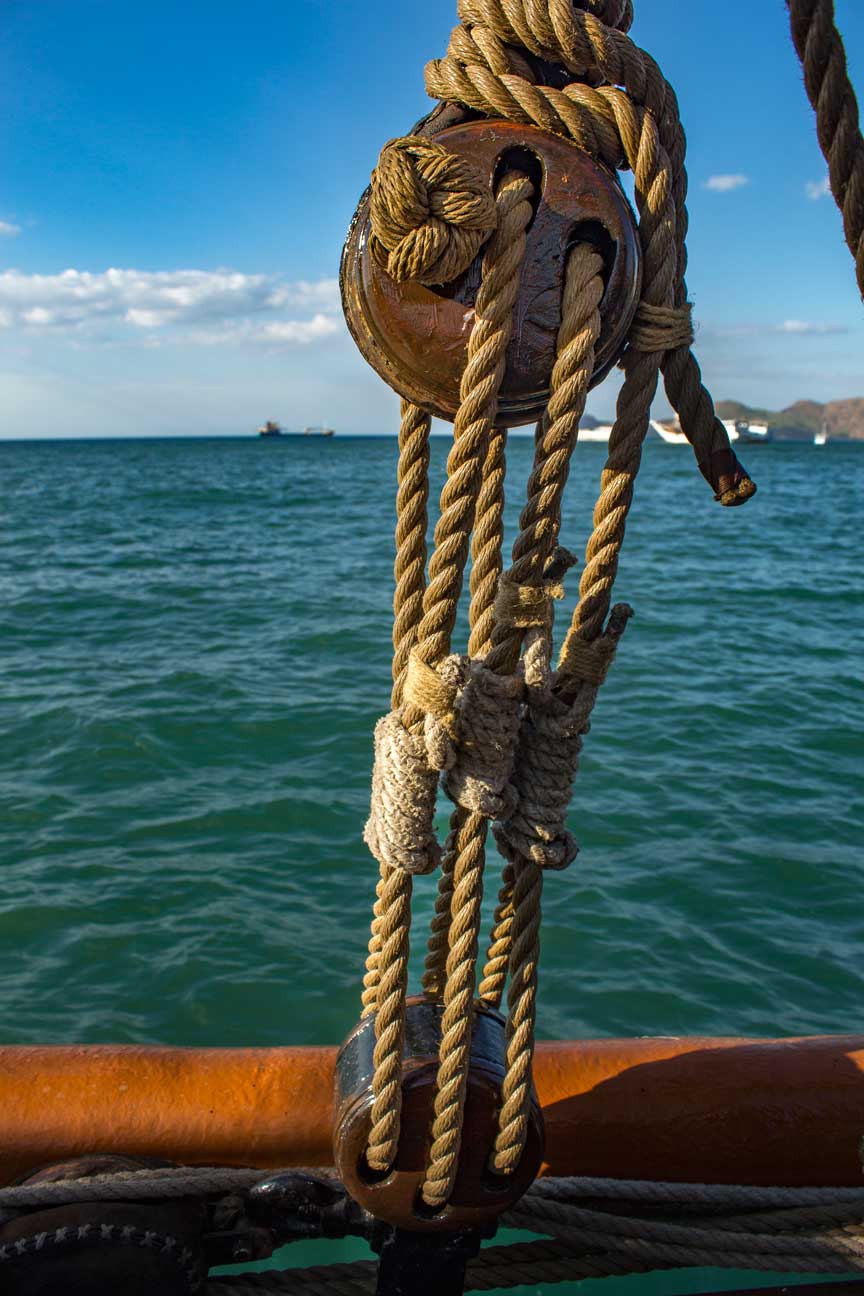
- Here is the job done and dusted.
-
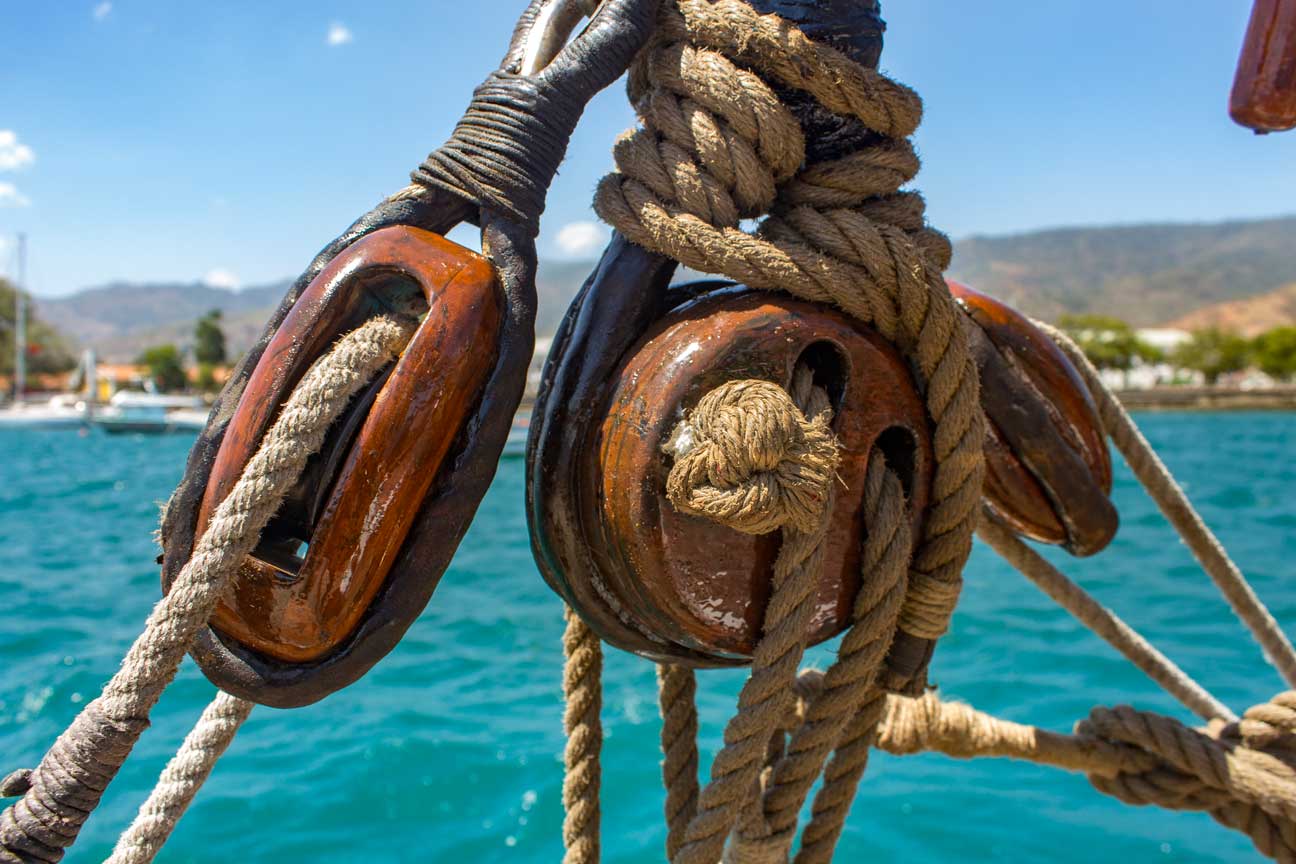
- Our next job was overhauling the main square sail tacks and sheets.
Subscribe to our Newsletter for monthly updates